Recently, a client came to therapy carrying an overwhelming sense of shame. They had begun the difficult work of recovery from compulsive sexual behaviour and were just a few months sober. Their relationship had been deeply damaged, trust had been broken, and they felt as though their entire identity had been reduced to the worst things they had ever done.
What struck me most wasn't the addiction itself—it was the way shame had become its own addiction.
Like many people struggling with compulsive behaviours, this client believed they were fundamentally broken. They described themselves as a monster, convinced that if others truly knew them, they would be rejected forever. These thoughts became so dark that, on difficult mornings, the temptation wasn't only to return to the addictive behaviour but to escape the emotional pain altogether.
This is one of the cruelest aspects of addiction.
Most people assume addiction is about pleasure. In reality, it is far more often about relief.
Whether the addiction is pornography, alcohol, drugs, gambling, work, food, or endless scrolling, the compulsive behaviour becomes a way of regulating emotional states that feel unbearable. Shame, loneliness, grief, anxiety, emptiness, rejection, and fear become so overwhelming that the mind reaches for something—anything—that promises temporary relief.
The tragedy is that the relief never lasts.
Instead, the behaviour creates more shame, which creates more emotional pain, which strengthens the desire to escape. Before long, a vicious cycle develops:
Emotional pain → Compulsive behaviour → Temporary relief → Shame → More emotional pain.
Breaking that cycle requires much more than willpower.
It requires compassion.
One of the most important ideas we explored in therapy was that people are not addicted because they are bad people. They are addicted because they discovered a way—however destructive—to regulate emotional pain that they did not know how to face directly.
Understanding this does not excuse harmful behaviour. People must take responsibility for the consequences of their actions. Trust must be rebuilt. Relationships may or may not survive. Accountability is essential.
But accountability is very different from self-condemnation.
Carl Jung understood that what remains unconscious continues to shape our lives. Until we become aware of the emotional wounds driving our behaviour, we simply repeat the same patterns in different forms. Recovery is not merely about stopping a behaviour; it is about becoming conscious of the suffering that made the behaviour seem necessary in the first place.
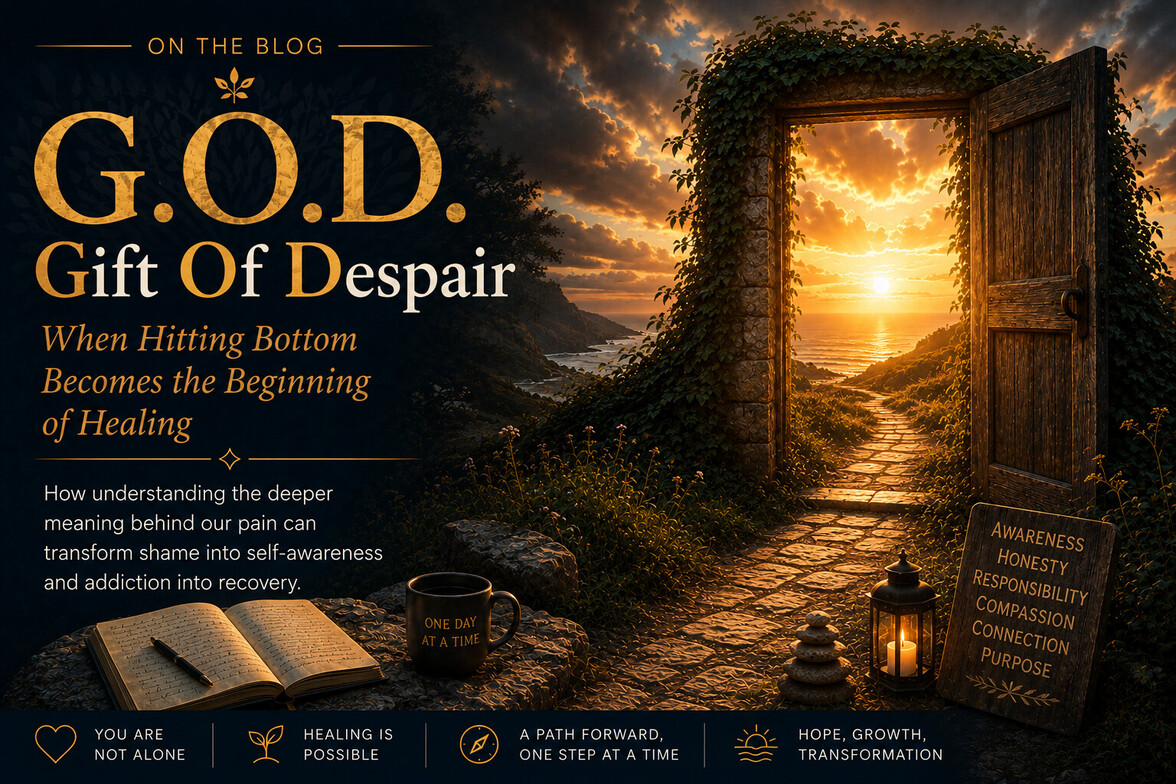
During our conversation, we also discussed what many people in recovery call "the Gift Of Despair."
It sounds like a contradiction, yet it often marks the beginning of genuine transformation.
For years, many people live with one foot in recovery and one foot in addiction. They make promises, attend therapy briefly, stop for a few weeks, then return to familiar patterns. They hope things will improve without fundamentally changing.
Eventually, however, life has a way of confronting us with reality.
A relationship ends. A secret is exposed. Health deteriorates. A career is threatened. The carefully separated compartments of life collide, and the illusion that everything is under control disappears.
Although devastating, these moments often become the turning point.
Only when we stop denying reality can we begin living in it.
In many recovery traditions, this is called surrender—not surrendering to defeat, but surrendering the illusion that we can continue living the same way while expecting different results.
As a therapist, I have come to believe that healing begins the moment people stop asking, "How do I stop feeling this?" and begin asking, "What is this pain trying to teach me?"
That question changes everything.
The addiction is no longer the whole story.
The story becomes one of learning to tolerate difficult emotions without escaping them. It becomes a story of rebuilding integrity one day at a time. It becomes a story of discovering that our worth is not determined by our worst decisions, but by our willingness to face them honestly and grow from them.
Recovery is rarely about becoming a different person.
More often, it is about becoming the person who was hidden beneath years of shame, fear, and compulsive attempts to escape emotional pain.
If you recognize yourself in this story, know that you are not alone. Healing is possible. It begins not with perfection, but with honesty, courage, and the willingness to take the next right step—even when that step feels very small.
Sometimes the deepest despair becomes the doorway to the greatest transformation.

James Leitch
Contact Me